
EVLA vs. Vein Stripping: Why Modern Laser Procedures Are Preferred
For many years, vein stripping was a standard surgical approach for treating certain varicose veins. Today, minimally invasive treatments such as endovenous laser ablation (EVLA) are often preferred when patients are appropriate candidates.
Both approaches aim to address problematic superficial veins, but they do so differently. Vein stripping generally involves surgically removing or disconnecting an affected vein, while EVLA uses controlled laser energy to close a targeted vein from the inside. Current vascular guidelines recommend endovenous ablation over high ligation and stripping for appropriately selected patients with symptomatic axial reflux in major superficial veins.
At Atrium Vascular, we provide specialized vascular services for referred patients from Richmond Hill, Markham, Vaughan, Aurora, Scarborough, North York, and communities throughout the Greater Toronto Area (GTA).
What Is EVLA?
EVLA stands for endovenous laser ablation, a minimally invasive procedure used to treat certain veins affected by venous reflux. During EVLA, ultrasound is generally used to guide a thin laser fibre into the targeted vein through a small access point. Local anaesthetic is commonly administered around the treatment area.
Controlled laser energy is then delivered from inside the vein. The heat affects the vein wall, causing it to close. Blood is subsequently redirected through other functioning veins, and the treated vein is gradually broken down and absorbed by the body.
Rather than physically removing the entire vein, EVLA essentially takes the problematic vessel out of circulation by closing it.
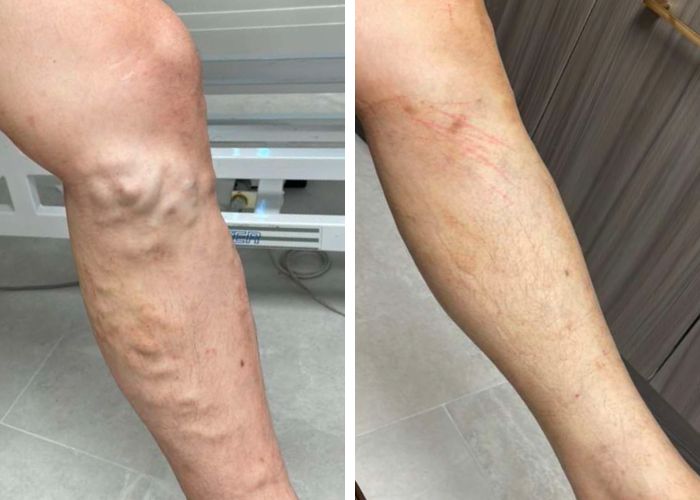
What Is Traditional Vein Stripping?
Vein stripping is a surgical procedure historically used to treat certain varicose veins.
Traditional surgery can involve making incisions, tying off the affected superficial vein and physically removing a portion of it. The exact surgical technique depends on the veins involved and the patient’s circumstances.
Vein stripping remains a treatment option in certain situations. However, modern endovenous procedures have changed how many patients with symptomatic venous reflux can be treated.
The fact that EVLA is less invasive does not mean traditional surgery is never appropriate. Vein anatomy, available expertise, medical history, and other clinical factors can influence treatment selection.
Why Is EVLA Often Preferred Over Vein Stripping?
One of the biggest differences is how the vein is accessed.
EVLA treats the vein internally using a thin laser fibre rather than relying on the larger surgical approach associated with traditional stripping. It can generally be performed using local anaesthetic and ultrasound guidance.
Current Society for Vascular Surgery, American Venous Forum, and American Vein and Lymphatic Society guidelines recommend endovenous ablation over high ligation and stripping for appropriately selected patients with symptomatic axial reflux involving the great or small saphenous veins.
Potential advantages of a minimally invasive approach can include smaller access sites and a different recovery experience compared with traditional surgery. Individual results and recovery still vary.
Does EVLA Have Risks?
Yes. Minimally invasive does not mean risk-free.
Temporary bruising, tenderness, tightness, or soreness can occur after EVLA. Less common complications can include infection, nerve-related symptoms, skin injury, inflammation, and blood-clot-related complications.
Traditional surgery also has potential complications and recovery considerations. Before choosing either treatment, the potential benefits, risks, alternatives, and expected outcomes should be discussed based on the individual patient’s health and vascular condition.
How Is the Appropriate Treatment Selected?
Visible varicose veins alone do not determine which treatment a patient should receive.
A vascular specialist may review symptoms, medical history, previous treatments, medications, swelling, skin changes, and other clinical factors. Duplex ultrasound may be used to evaluate blood flow and identify venous reflux.
Vein anatomy matters as well. Guidelines recognize that there are situations where surgical ligation and stripping may remain appropriate, including when anatomy prevents endovenous treatment or when endovenous expertise or technology is unavailable.
This is why treatment recommendations should follow an individualized vascular assessment.
How Does Recovery Compare?
Recovery is an important reason patients may be interested in modern vein procedures.
Because EVLA is performed through a small access point rather than traditional surgical removal of the vein, patients can often return to many everyday activities relatively quickly. Walking is commonly encouraged after endovenous ablation.
Traditional surgical treatment can involve incisions and different postoperative considerations, potentially including wound care and a different recovery process.
However, it is important not to assume that every EVLA patient will have the same recovery. The number of veins treated, additional procedures, individual health, occupation, and other factors can influence when someone can return to work, exercise, driving, or strenuous activity.
What Makes Us Unique
At Atrium Vascular, we recognize that modern vascular care is about choosing an appropriate treatment for the individual rather than assuming one procedure is right for everyone. Our approach emphasizes specialized vascular expertise, individualized assessment, patient-centred care, and clear communication about treatment options.
For referred patients, we evaluate relevant symptoms and clinical findings before discussing vascular care options appropriate to individual circumstances.
Atrium Vascular provides specialized vascular services for referred patients throughout Richmond Hill, Markham, Vaughan, Aurora, Scarborough, North York, and the Greater Toronto Area.
Have Questions About EVLA or Vein Treatment?
A medical referral is required to see Dr. Sydney Wong. If you have varicose veins, swelling, aching, heaviness, skin changes, or another vascular concern and would like your treatment options assessed, please speak with your family physician or primary healthcare provider about whether a referral to Dr. Sydney Wong is appropriate for you.
The clinic can answer questions regarding available services and the referral process, but determining whether EVLA, traditional surgery, or another approach is appropriate requires an individualized medical assessment.