
ABI testing is a simple way to identify peripheral artery disease by comparing blood pressure in your arms and ankles. At Atrium Vascular Associates, board-certified vascular and endovascular surgeon Dr. Sydney Wong uses it to guide thoughtful, individualized vascular care.
Identify Blood Circulation
Problems Early
ABI testing, or Ankle-Brachial Index testing, is a simple, noninvasive way to assess blood flow to your legs. It works by comparing blood pressure measured at your ankles with that in your arms. Lower numbers in the legs may indicate peripheral artery disease (PAD). ABI testing can identify circulation problems early, sometimes before symptoms become severe, which allows for timely evaluation, risk assessment, and thoughtful treatment planning.

What Does ABI Testing Diagnose?
Ankle-Brachial Index (ABI) testing primarily diagnoses peripheral artery disease (PAD), a condition caused by narrowed or blocked arteries that reduce blood flow to the legs. PAD develops gradually and may be present long before symptoms feel obvious or severe. By comparing blood pressure in the arms and ankles, ABI testing helps identify early blood circulation problems and assess disease severity. You may need ABI testing if:
- You experience leg pain or cramping when walking
- You notice leg fatigue, heaviness, or weakness
- You have slow-healing sores on your feet or legs
- You have diabetes, a smoking history, or vascular risk factors
- You have reduced pulses or abnormal circulation findings
Why Choose Dr. Sydney Wong?
Dr. Sydney Wong is a board-certified vascular and endovascular surgeon with advanced training in diagnosing and managing complex circulation problems. When ABI testing suggests reduced blood flow, Dr. Wong uses his expertise to interpret the results in the context of your symptoms, anatomy, and overall health. He explains what your results mean, whether further testing is needed, and how they fit into a personalized plan to protect your long-term health.
What to Expect During ABI Testing?
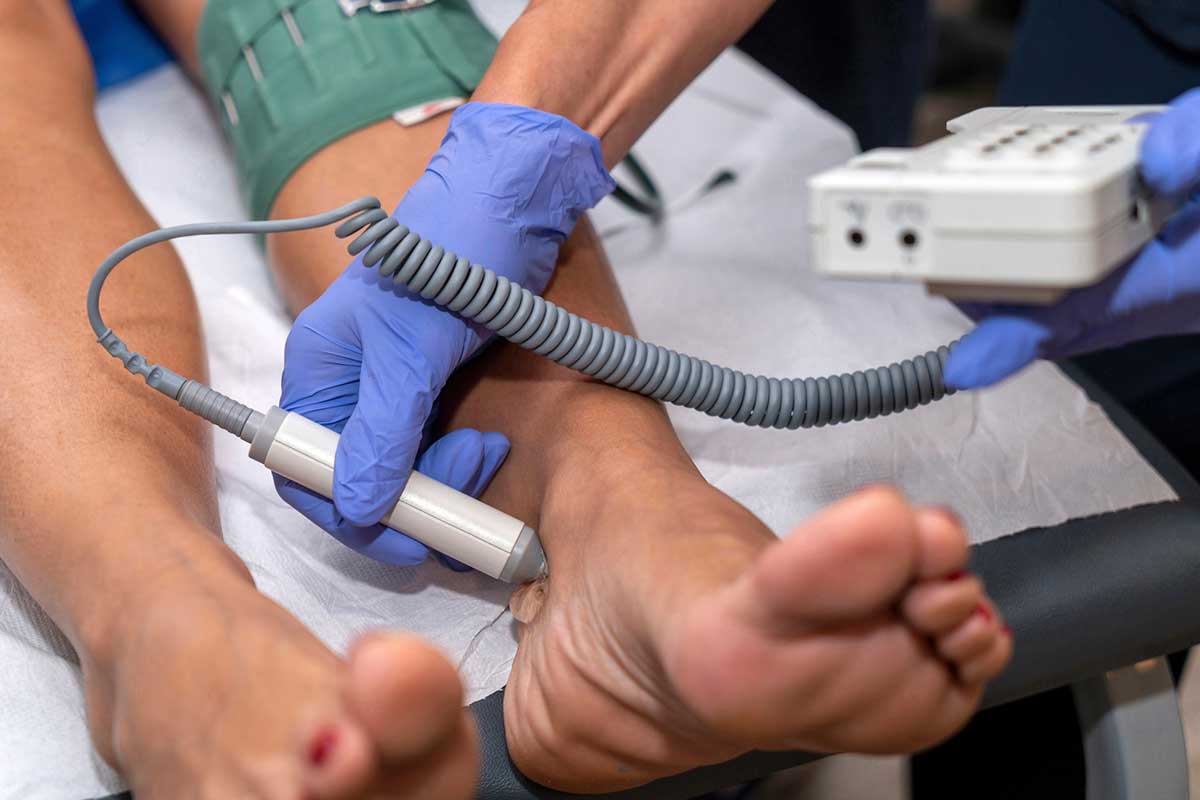
During ABI testing, which is performed off-site, you will lie comfortably on an exam table while blood pressure cuffs are placed on your arms and ankles. A handheld Doppler device is used to listen to blood flow and measure pressures at each location. You may feel a tightening of the cuffs, similar to a blood pressure check. The process takes 10 to 15 minutes, requires no needles or recovery time, and allows you to resume normal activities immediately.
Benefits of ABI Testing
ABI testing offers a straightforward way to evaluate circulation and identify potential vascular concerns early, without invasive procedures or lengthy appointments. Key advantages include:
- Noninvasive assessment of leg circulation
- Early detection of peripheral artery disease
- Quick testing with minimal discomfort
- Useful guidance for further vascular evaluation
- Support for personalized treatment planning
ABI Testing FAQs
Do I Need to Prepare for ABI Testing?
In most cases, no special preparation is required. You can eat, drink, and take your usual medications unless you are given specific instructions otherwise. Wearing loose, comfortable clothing that allows access to your arms and lower legs can make the process smoother. Your care team will guide you if anything additional is needed.
What Do Abnormal ABI Results Mean?
An abnormal ABI result suggests reduced blood flow to your legs, most commonly due to peripheral artery disease (PAD). The numbers can help indicate whether circulation is mildly, moderately, or more severely affected. These results are not a diagnosis in themselves, but an important piece of information that guides next steps and further evaluation.
If My ABI is Abnormal, What Happens Next?
If your results are outside the normal range, Dr. Wong will review them with you in detail. He considers your symptoms, medical history, and risk factors rather than relying on the test alone. Depending on your situation, he may recommend additional imaging, lifestyle modifications, medical management, or continued monitoring. Care is always individualized.
Schedule Your Consultation
Atrium Vascular Associates is committed to individualized vascular care. Our clinic is located in Richmond Hill and proudly serves patients throughout the Greater Toronto Area. If you have concerns about circulation or have been referred for ABI testing, schedule a consultation today.