
Swollen Ankles, Leg Swelling, and Lower Extremity Discomfort: When Could Circulation Be a Factor?
Swollen ankles, leg swelling, and lower extremity discomfort can occur for many reasons. After spending a long day standing, sitting for extended periods, travelling, or being particularly active, you may notice that your legs or ankles feel heavier or more uncomfortable than usual.
Occasional swelling can have everyday causes, but swelling that persists, repeatedly returns, affects one or both legs, or occurs alongside other symptoms may deserve closer attention. In some cases, changes in the veins or circulation can contribute to swelling and discomfort in the lower extremities.
At Atrium Vascular, we help patients across Richmond Hill, Markham, Vaughan, Aurora, Scarborough, North York, and the Greater Toronto Area (GTA) better understand vascular symptoms and determine when further assessment may be appropriate.
Why Do Ankles and Legs Become Swollen?
Swelling occurs when fluid accumulates within the body’s tissues. In the lower extremities, this can sometimes become particularly noticeable around the ankles, feet, or lower legs.
There are many possible reasons for swollen ankles or legs. Prolonged sitting or standing, certain medications, injuries, and other medical conditions may contribute. Circulation problems can also be a factor.
Your veins are responsible for helping return blood from your legs toward your heart. When the veins are not functioning as efficiently as they should, blood and fluid can accumulate in the lower extremities. This may contribute to swelling, heaviness, aching, or other forms of leg discomfort.
Because swelling can have many potential causes, experiencing swollen ankles does not automatically mean that you have a vascular condition. A professional assessment can help identify what may be contributing to your symptoms.
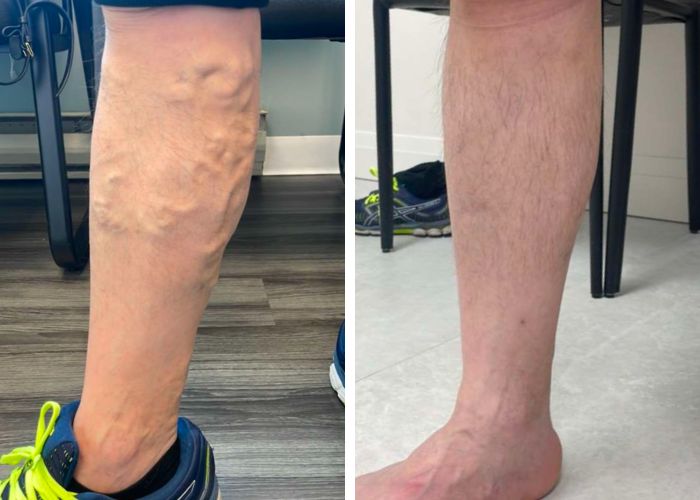
Could Leg Swelling Be Related to Your Circulation?
Healthy circulation depends on arteries and veins working together to move blood throughout the body. While arteries carry blood away from the heart, veins help transport blood back toward it.
The veins in your legs must work against gravity to return blood upward. Valves inside the veins help prevent blood from flowing backward. When these valves or veins are not working effectively, blood may collect in the lower extremities and contribute to swelling and discomfort.
Certain vascular conditions can therefore be associated with leg swelling. However, circulation problems are only one possible explanation. Swelling may also be associated with injuries, medications, prolonged inactivity, or medical conditions unrelated to the vascular system.
This is why identifying the underlying cause matters rather than assuming all leg swelling has the same explanation.
Signs and Changes Worth Paying Attention To
Consider how frequently your swelling occurs, when it develops, and whether anything makes it better or worse. Swelling that repeatedly appears around the ankles or lower legs, persistent heaviness or aching, visible or enlarged veins, skin changes, or discomfort that becomes worse after prolonged standing may be worth discussing with a healthcare provider.
It is also important to notice whether swelling affects one leg or both and whether there has been a sudden change from what is normal for you.
These signs alone cannot diagnose a circulation problem, but they can provide valuable information during a medical or vascular assessment.
When Should You Seek Medical Attention for Leg Swelling?
Persistent or recurring leg swelling should not simply be ignored, particularly when you cannot identify an obvious cause.
Consider speaking with a healthcare professional if swelling repeatedly returns, gradually becomes worse, causes ongoing discomfort, or interferes with normal activities. Changes in the skin or veins around the affected area may also warrant assessment.
Some symptoms require more immediate medical attention. Sudden or significant swelling, particularly when affecting one leg, severe unexplained pain, unusual warmth or colour changes, chest pain, or difficulty breathing may require urgent medical evaluation.
How Can a Vascular Specialist Assess Leg Swelling?
A vascular assessment focuses on determining whether the blood vessels may be contributing to your symptoms.
A vascular specialist may ask when your swelling started, whether it affects one or both legs, when it tends to become worse, and whether you experience additional symptoms. Your medical history and other relevant health factors may also be reviewed.
A physical examination can help identify changes involving the legs, ankles, skin, and visible veins. When clinically appropriate, vascular testing may also be recommended to assess circulation.
The appropriate assessment and treatment approach depends on the individual. Not everyone experiencing swollen ankles or leg discomfort will require the same testing or care.
Supporting Your Vascular Health
Regular movement can support healthy circulation, particularly if your daily routine involves extended periods of sitting or standing. Taking opportunities to move throughout the day and following recommendations from your healthcare provider can contribute to overall vascular health.
It is important, however, not to rely solely on lifestyle changes when swelling is persistent, unexplained, worsening, or accompanied by concerning symptoms. Understanding why the swelling is occurring can help determine the appropriate next steps.
What Makes Us Unique
At Atrium Vascular, we recognize that symptoms such as swollen ankles, leg swelling, and lower extremity discomfort can have multiple possible causes. Our approach emphasizes individualized assessment rather than assuming every patient’s symptoms have the same explanation.
We focus on specialized vascular expertise, patient-centred care, clear communication, and appropriate diagnostic approaches. Patients should understand why an assessment or test may be recommended and what their options may be if a vascular condition is identified.
Serving Richmond Hill, Markham, Vaughan, Aurora, Scarborough, North York, and the Greater Toronto Area, Atrium Vascular helps patients make informed decisions about their vascular health.
Ready to Take the Next Step Toward Healthier Legs?
Heavy legs, leg fatigue, aching legs, and tired legs can sometimes result from ordinary everyday activities. However, when these symptoms become persistent, recurrent, or increasingly disruptive, understanding their cause can be an important step toward protecting your vascular health.
If persistent leg discomfort is affecting your daily activities, consider speaking with Dr. Sydney Wong at Atrium Vascular to learn whether a vascular assessment may be appropriate.